Almost a decade after the murder of Berta Cáceres, the judicial process in Honduras has produced some convictions, but it has also left key questions unanswered about the true extent of justice. The case became an international symbol not only because of the seriousness of the crime, but also because it exposes the limits of the Honduran judicial system to investigate complex crimes involving business actors, power structures and possible state responsibilities.
This article explains, without technical jargon, what has been tried, who has been convicted and what remains pending on the road to full justice.
The first convictions: the perpetrators
In November 2018, a Honduran court convicted seven men for the murder of Berta Cáceres. Among them were hitmen, former military personnel, and individuals with employment or contractual ties to Desarrollos Energéticos S.A. (DESA), the developer of the Agua Zarca hydroelectric project.
These sentences confirmed that the crime was not an isolated or spontaneous act, but a planned action involving individuals with military training and access to weapons. However, at that time, the convictions focused on those who carried out or materially facilitated the murder, without making clear progress towards higher-level responsibilities.
The conviction of the former DESA manager
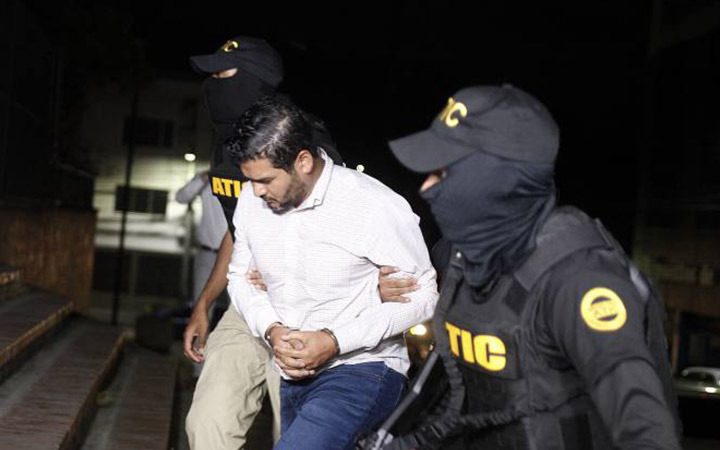
In June 2021, the Honduran justice system took a further step by convicting Roberto David Castillo, former general manager of DESA, as a co-perpetrator of the murder. The court concluded that Castillo used his position within the company to coordinate actions, manage key information and provide the resources necessary to carry out the crime.
This conviction was considered a milestone, as it was the first time that a senior business executive had been held criminally responsible. However, the trial did not end the debate over who was behind the crime, as Castillo was not the head of the company nor the only one with decision-making power.
Which convictions were upheld and which were not
Although the sentences marked important progress, for several years some convictions were subject to legal appeals. This fuelled the perception of slowness and uncertainty in the judicial process.
For the victims and supporting organisations, partial justice — with convictions that take years to become final — is tantamount to a form of prolonged impunity, especially when those with the greatest economic and political power remain beyond the reach of the courts.
What remains pending: the mastermind
One of the main demands in the Berta Cáceres case is the investigation and punishment of the masterminds. Although the names of individuals linked to DESA’s management have emerged during the judicial process, not all of them have been brought to trial or face convictions.
This has reinforced the idea that the Honduran justice system has moved more quickly against the perpetrators of the crime than against those who made the strategic decisions behind the murder.
State responsibility
Another pending issue is the determination of state responsibility. Before and after the crime, Berta Cáceres had reported threats and harassment, and had international precautionary measures in place for her protection.
Despite this, the state failed to guarantee her safety. To date, there have been no criminal convictions against public officials for actions or omissions in protecting the defender, nor for possible irregularities in the initial investigation.
Reparation and guarantees of non-repetition
Beyond criminal convictions, the case raises questions about comprehensive reparation for the affected communities and guarantees that similar crimes will not be repeated. For social and human rights organisations, justice is not limited to sentences, but involves structural changes in the way the Honduran state protects those who defend the territory and the environment.
As long as these issues remain unresolved, the Berta Cáceres case will continue to be an example of incomplete justice: with important advances, but insufficient in view of the magnitude of the crime and the power structures that made it possible.
An ongoing process
The murder of Berta Cáceres is not just a closed case in the courts. It is a living process, closely followed by Honduran society and the international community. The existing convictions show that progress is possible, but what remains to be done reminds us that full justice has yet to be achieved.