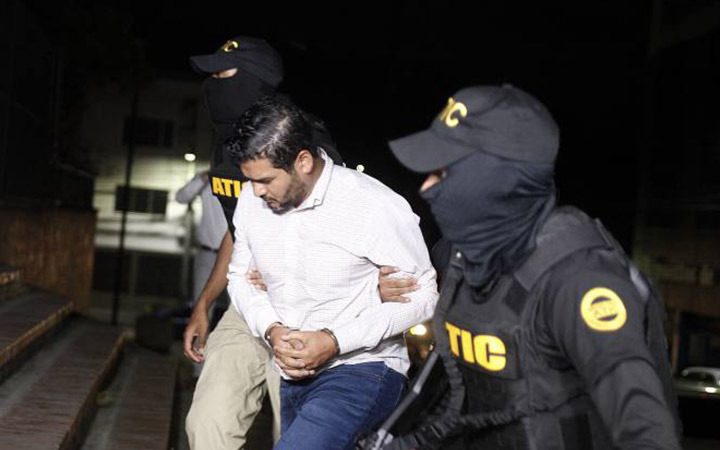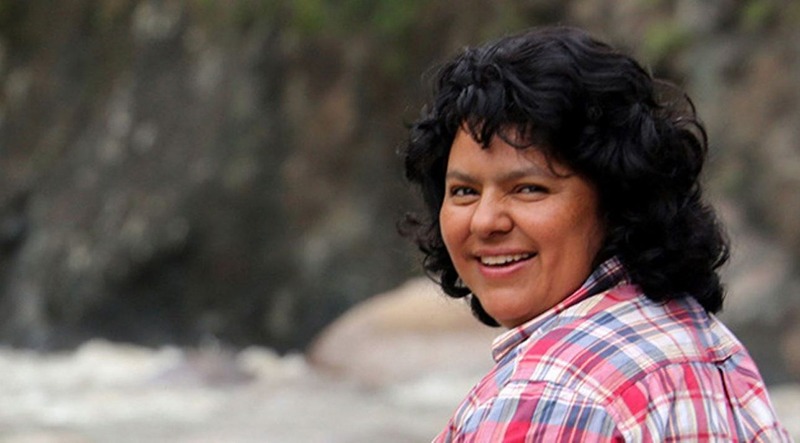
Almost a decade after the murder of Berta Cáceres, one of Latin America’s most renowned environmental activists, the work of the Interdisciplinary Group of Independent Experts (GIEI) has made it possible to reconstruct with greater precision how the crime was planned, financed and carried out, as well as the multiple failures — and deliberate omissions — of the Honduran state. Far from being an isolated incident, the most recent investigation confirms that the murder was the culmination of structural violence against an indigenous woman who challenged deeply rooted economic, political and military interests.
Who was Berta Cáceres and why was her murder not an isolated incident?
Berta Cáceres was a leader of the Lenca people, co-founder of the Civic Council of Popular and Indigenous Organisations of Honduras (COPINH) and a renowned defender of human rights and the environment. Her struggle focused on defending the Gualcarque River, considered sacred by the Lenca communities, against the Agua Zarca hydroelectric project promoted by the company Desarrollos Energéticos S.A. (DESA).
The GIEI report maintains that her murder was not a random act or a crime of passion, as was attempted to be established from the early stages of the official investigation. On the contrary, it was the culmination of a prolonged process of persecution, threats, criminalisation and violence, in the context of the imposition of extractive projects without the consent of indigenous communities. Berta had repeatedly reported death threats and harassment, without the state providing effective protection.
How was the murder planned and carried out, according to the GIEI investigation?
The GIEI investigation reconstructs the murder as a pre-planned operation. The crime was carried out by a network of hitmen who had precise information about Berta Cáceres’ movements, the result of prior surveillance and monitoring.
The report documents previous failed attempts, including a plan in February 2016, demonstrating that the murder was the result of a decision that had been in the making for some time. The criminal network operated in coordination with DESA employees and active and retired members of the Honduran Armed Forces, who provided tactical knowledge, access to weapons, and logistics. The resources for mobilisation, payments, and cover-up came from funds linked to the company.
What irregularities and obstructions marked the official investigation by the Public Prosecutor’s Office?
The GIEI identifies serious irregularities in the actions of the Honduran Public Prosecutor’s Office. From the outset, the investigation was diverted towards false hypotheses, such as the so-called ‘crime of skirts’, which sought to discredit the victim and depoliticise the murder.
The loss or failure to carry out key expert analyses, such as the complete analysis of mobile phones and seized weapons, was documented. In addition, the case was deliberately fragmented, which prevented the investigation of the criminal structure as a whole and protected the alleged masterminds. Almost ten years after the crime, the investigation remains incomplete, with high-level responsibilities that have not been fully clarified.
How were funds from international banks diverted to finance the crime?
One of the most serious findings of the GIEI is the identification of a complex financial scheme behind the Agua Zarca project. Funds granted by international banks such as FMO (Netherlands), BCIE and FinnFund, officially earmarked for the construction of the dam, were systematically diverted.
According to the report, around 67% of the funds were channelled through front companies such as CONCASA and PEMSA, and through cash withdrawals without clear justification. These funds were used to pay for private security, informant networks, surveillance operations and, ultimately, the logistics necessary to carry out the murder of Berta Cáceres.
Who are the alleged masterminds and executives linked to DESA?
The GIEI describes a power structure concentrated at the top of DESA. It includes members of the Atala family—Jacobo, Pedro, and Daniel—as well as Roberto David Castillo, former manager of the company and former military intelligence officer.
According to the investigation, these executives participated in strategic decision-making, in the administration of financial resources used for illegal activities, and in the design of mechanisms of pressure and violence against COPINH. Their political and economic connections were key to ensuring the continuity of the project and impunity in the face of complaints.
What acts of corruption allowed for the illegal concession of the Gualcarque River?
The report concludes that the Agua Zarca project was flawed from its inception. The Lenca people were not consulted in a free, prior and informed manner, as required by international law. In addition, the manipulation of municipal records to simulate community support was documented.
The GIEI also identified bribe payments to officials of the Secretariat of Natural Resources and Environment (SERNA) and local mayors, as well as ‘revolving door’ practices, whereby former officials of the National Electric Energy Company (ENEE) went on to work for DESA, facilitating the approval and viability of the project.
What was the level of collusion between the private company and the state security forces?
The investigation reveals a high level of collusion between DESA and the Honduran state security forces. Police and military personnel acted, in practice, as private security for the company.
DESA financed travel expenses, food and accommodation for police officers deployed in the area, while coordinating repressive operations against the communities of Río Blanco and COPINH. Military intelligence was also used to monitor, surveil and profile Berta Cáceres and other community leaders.
What collective damage did the Río Blanco community and COPINH suffer?
The murder of Berta Cáceres caused damage that goes beyond individual loss. The GIEI documents a profound impact on the social fabric of the Río Blanco community, marked by community division induced by the company, the destruction of crops and the militarisation of the territory.
It also recognises the spiritual damage caused by the impact on the Gualcarque River, considered sacred, and the systematic stigmatisation of COPINH, presented as an ‘enemy of development’, which increased the risks to its members.
What measures does the Comprehensive Reparation Plan proposed by the GIEI include?
In response to this damage, the GIEI proposes a Comprehensive Reparation Plan that includes structural and symbolic measures. These include the definitive revocation of the Agua Zarca project concession, the titling of the ancestral lands of the Río Blanco community, and the dissolution of the DESA company.
The plan also includes the purging of intelligence files, community health programmes, and the creation of educational scholarships in honour of Berta Cáceres, as a form of reparation and remembrance.
What urgent recommendations does the GIEI make to ensure non-repetition?
In closing, the report makes recommendations aimed at preventing crimes like this from happening again. These include far-reaching reforms to the Public Prosecutor’s Office to strengthen the investigation of complex crimes, stricter regulations for international banks and extractive companies, and the effective strengthening of protection mechanisms for environmental defenders in Honduras.
The most recent investigation into the Berta Cáceres case shows that justice cannot be limited to individual convictions, but must address the structures of power, corruption and violence that made her murder possible.